


Treat fibroids
without surgery — and protect your fertility.
Partial uterine fibroid embolization is a minimally invasive, image-guided procedure that blocks only the small vessels feeding your fibroids, while leaving the larger vessels and surrounding healthy uterine tissue with their blood supply. No incision, no general anesthesia, no hospital stay. Performed as an outpatient by Dr. Atabak Allaei, a double board-certified interventional radiologist.
Fertility-sparing UFE at a glance
A non-surgical, image-guided procedure — recovery in days, not weeks.
Spontaneous pregnancy within 2 years in a 359-woman study
Fibroids treated at once — uterus preserved
Recovery — versus weeks for surgery
Image-guided procedures, incl. 2,000+ embolizations
Fertility-sparing (partial) uterine fibroid embolization treats fibroids by blocking only the small arteries that feed them, leaving the larger vessels open. Through a small nick in the wrist or groin, Dr. Allaei delivers tiny particles under X-ray guidance, so the fibroids shrink while healthy uterine tissue keeps its blood supply. There is no incision, no general anesthesia and no hospital stay, and pregnancy after the procedure has been well documented.
Small nick in the skin
Unlike hysterectomy
Treated at once
Days, not weeks
Key takeaways: fertility-sparing UFE
- Targeted, not total: Only the small vessels feeding the fibroids are embolized, leaving larger vessels and healthy uterine tissue with their blood supply.
- Non-surgical and outpatient: A small nick in the skin, no general anesthesia, no stitches and no hospital stay.
- Pregnancy is possible: In a study of 359 women unable to conceive, 40% became pregnant spontaneously within two years of UFE.
- Compare honestly: See how pregnancy rates after UFE and after myomectomy compare in head-to-head studies, below.
- Treats all fibroids at once and saves your uterus — unlike myomectomy or hysterectomy.
- Shared decision-making: Your fertility goals, health and preferences guide whether partial UFE is the right choice.
What are uterine fibroids?
Uterine fibroids are non-cancerous growths in the uterus — a common gynecological condition affecting many women of reproductive age.
Prolonged or heavy periods are one of the most common fibroid symptoms.
Fibroids can cause pelvic pain, pressure and an enlarged uterus.
Fibroids can interfere with conception and pregnancy.
Uterine artery embolization (UAE), also called uterine fibroid embolization (UFE), has been an effective, minimally invasive treatment for fibroid symptoms for over 20 years. For women who want to become pregnant, however, a key question has been how treatment affects future fertility.
Partial uterine fibroid embolization was developed to answer that concern. It aims to strike a balance between relieving symptoms and preserving fertility — making it a promising option for women who want to protect their ability to conceive.
Traditional vs. partial uterine fibroid embolization
Both block blood flow to fibroids. Partial UFE is more targeted — embolizing only the small vessels to the fibroids and leaving the larger vessels open.
- Small particles are injected into the uterine arteries
- Blood flow to the fibroids is blocked, so they shrink
- Highly effective for symptom relief
- Concerns about its effect on fertility led to a more refined approach
- Only the small arterial vessels to the fibroids are embolized
- The larger vessels of the fibroids are left open
- Surrounding healthy uterine tissue keeps its blood supply
- Designed to limit injury to the uterus and nearby reproductive organs
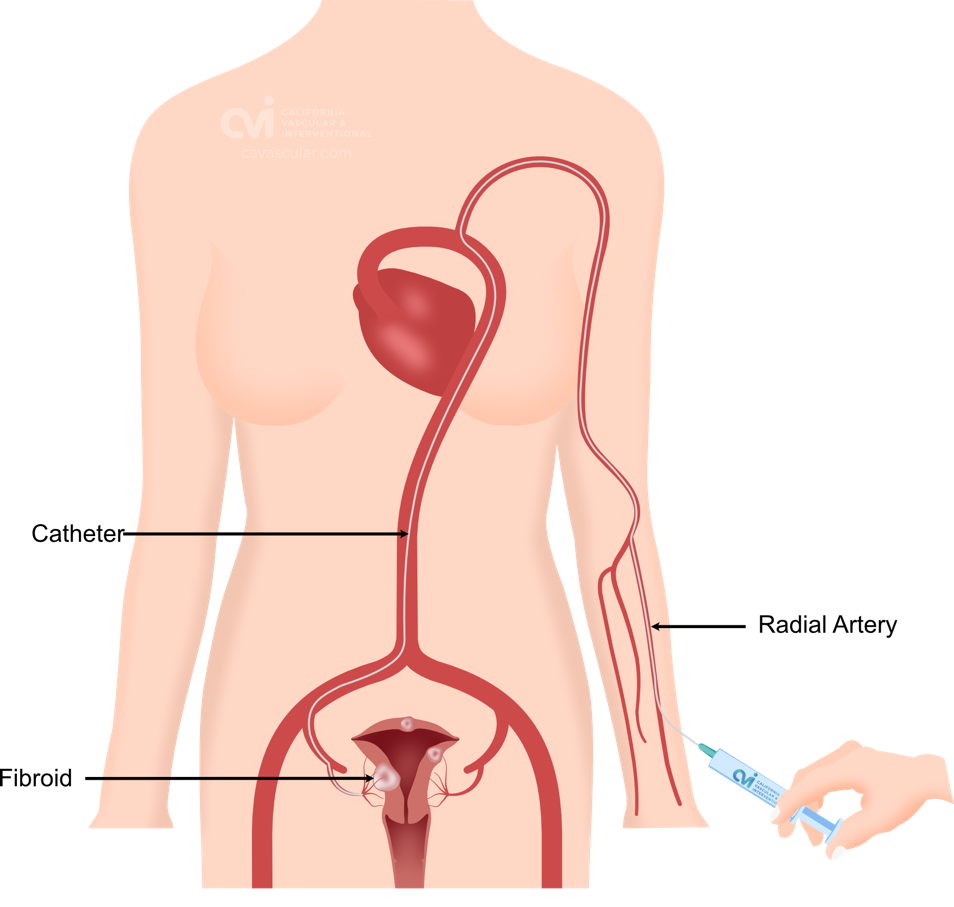
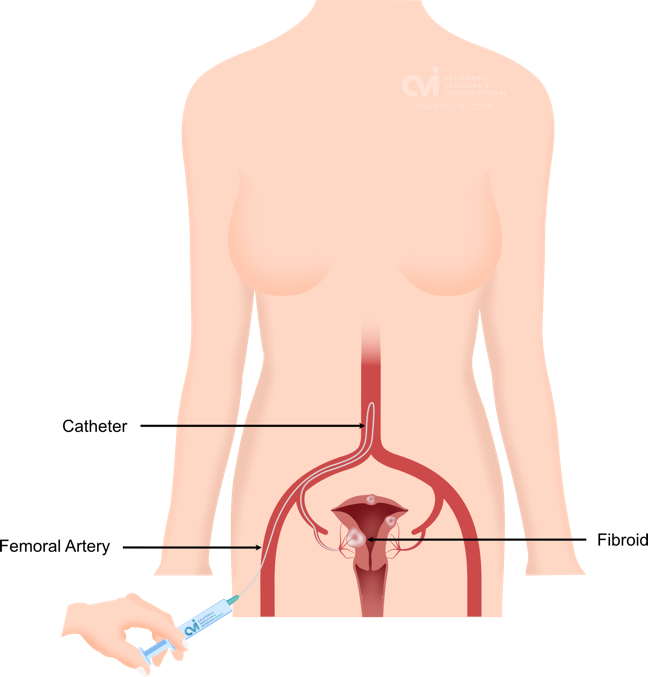
Fibroid embolization vs. surgery
Compared with myomectomy and hysterectomy, embolization needs no incision, no general anesthesia and no hospital stay — and it treats all fibroids at once while saving your uterus.
| Factor | Partial UFE | Conventional UFE | Myomectomy | Hysterectomy |
|---|---|---|---|---|
| Incision | Small nick in the skin | Small nick in the skin | Surgical incision | Surgical incision |
| Anesthesia | No general anesthesia | No general anesthesia | General | General |
| Hospital stay | None — outpatient | None — outpatient | Often required | Required |
| Uterus preserved | Yes | Yes | Yes | No — uterus removed |
| Treats all fibroids at once | Yes | Yes | Not always | Yes (uterus removed) |
| Recovery | A few days | A few days | A few weeks | A few weeks |
| Blood loss | Virtually none | Virtually none | Possible transfusion | Possible transfusion |
| Future pregnancy | Possible; designed to protect fertility | Possible | Possible; traditionally recommended when pregnancy is the main goal | Not possible |
Advantages of fibroid embolization over surgery
- No stitches
- No major scar or surgical incision — only a small nick in the skin
- No general anesthesia required
- No burning or scraping the lining of the uterus
- No internal cutting, bleeding or scarring
- No risks of hysterectomy
- No hospital stay — outpatient procedure
- Treats all fibroids at once (unlike myomectomy)
- Saves your uterus (unlike hysterectomy)
- Fast recovery — a few days versus a few weeks for surgery
- Low risk of complications
- Virtually no blood loss (versus possible transfusions)
- Significant improvement in quality of life
- Successful for over 20 years
These are just a few of the benefits over surgery. Read more about the advantages of UFE or see our full treatment comparison chart.
How partial UFE is designed to protect fertility
By embolizing only part of the fibroid’s blood supply, partial UFE aims to relieve symptoms while keeping the uterus as healthy as possible for a future pregnancy.
Preserves uterine tissue
Selective embolization limits damage to the surrounding uterine tissue — important for women hoping to conceive, since the health of the uterus matters for a successful pregnancy.
Maintains blood flow
Leaving the larger vessels open keeps blood flowing to the rest of the uterus and surrounding tissues, supporting overall uterine health.
No surgical scarring
There is no internal cutting of the uterus, so there is no surgical scar on the uterine wall.
How is fertility-sparing UFE performed?
An outpatient procedure under local anesthesia through a small nick in the skin — no incision, no stitches and no hospital stay.
Numbing & access
A local anesthetic numbs the skin, and a tiny tube is placed in an artery in the wrist (radial) or groin.
Map the uterine arteries
Live X-ray imaging guides the catheter into the uterine arteries and shows the vessels feeding each fibroid.
Partial embolization
Tiny particles are delivered to the small vessels supplying the fibroids, deliberately leaving the larger vessels open.
Go home & recover
No hospital stay. Most women recover in a few days, versus a few weeks after surgery.
Pregnancy after UFE vs. myomectomy: what the research shows
Head-to-head studies show mixed results. One randomized trial favored myomectomy, another favored embolization, and a 2024 meta-analysis found comparable pregnancy rates.
| Study | After UFE | After myomectomy | What it measured |
|---|---|---|---|
|
Mara et al., 2008 Randomized trial · 121 women planning pregnancy, fibroids larger than 4 cm | 50% | 78% | Pregnancy rate among women who tried to conceive in the first 2 years. |
|
FEMME trial, 2020 Randomized trial · 254 women (New England Journal of Medicine) | 8% | 4% | Pregnancy within 2 years. Most participants were not trying to conceive, so rates are low in both groups. |
|
Meta-analysis, 2024 13 studies, including 4 randomized trials | Comparable | Comparable | Both procedures showed comparable improvement in pregnancy rates. |
|
Pisco et al., 2017 — partial UFE 359 women unable to conceive · no myomectomy comparison group | 40.1% | Not studied | Spontaneous pregnancy within 2 years; 36.7% probability of pregnancy with a live birth. |
What this means for you. Myomectomy has traditionally been recommended when pregnancy is the main goal, and a Cochrane review found low-quality evidence that it may offer better fertility outcomes than conventional UFE. However, the randomized trials were small and their results conflict, and neither one studied partial UFE.
Why don’t all women conceive after UFE or myomectomy?
Treating fibroids removes one possible barrier to pregnancy — but fertility depends on many other factors. That is why no fibroid treatment, surgical or non-surgical, reaches 100%.
Factors that affect any woman’s fertility
Age
Fertility naturally declines with age, especially after 35. Women treated for fibroids are often in their late 30s or 40s, which affects pregnancy rates after any treatment.
Egg supply (ovarian reserve)
The number and quality of eggs decrease over time. A simple blood test (AMH) can help estimate your egg supply before treatment.
Partner factors
Male-factor infertility contributes in many couples who have trouble conceiving, so a semen analysis is an important part of any fertility evaluation.
Fallopian tubes
Blocked or damaged tubes can prevent pregnancy regardless of how well the fibroids are treated. Learn about tubal blockage treatment.
Other conditions
Endometriosis, adenomyosis, ovulation disorders and thyroid problems can all affect fertility independently of fibroids.
Not everyone was trying
In some studies, many participants were not actively trying to conceive, or follow-up was too short to capture later pregnancies.
Treatment-related factors
After myomectomy
- Scar tissue (adhesions) can form inside or around the uterus and affect implantation or the tubes
- A waiting period is usually advised so the uterine wall can heal before trying to conceive
- Fibroids can grow back over time
- When fibroids are numerous or deep in the uterine wall, not all may be removable
After UFE
- Changes to the uterine lining can occur — a hysteroscopy before trying to conceive can check for them
- Fibroids shrink rather than disappear, so a large fibroid may still affect the uterine cavity
- Rarely, reduced blood flow to the ovaries can affect egg supply, mainly in women closer to menopause
- Partial UFE is designed to limit these effects by leaving the larger vessels and healthy tissue untouched
How we help improve your chances
- We start with your fertility goals before recommending any treatment.
- We suggest a fertility work-up first — such as an AMH test, a partner semen analysis and a tubal check — so other causes are not missed.
- We use partial embolization to protect healthy uterine tissue.
- We recommend a hysteroscopy before you start trying to conceive, when appropriate.
- We coordinate with your gynecologist or fertility specialist so your care is planned together.
- We tell you honestly when myomectomy may be the better option for you.
Partial UFE results and who is a candidate
Partial UFE is clinically successful in a large majority of patients, and pregnancy after treatment has been demonstrated — but individual characteristics must be considered.
Shared decision-making between you and an interventional radiologist trained in partial UFE is essential, so the treatment aligns with your fertility goals, overall health and preferences. Dr. Allaei reviews your imaging, labs and history to determine whether you are a candidate and the outcomes you can expect.
What is recovery like?
UFE is an outpatient procedure with no hospital stay. Most women recover in a few days, compared with a few weeks after surgery.
Is UFE covered by insurance?
UFE is covered by many insurance plans. Check if we’re in your network in under a minute.
Real results from our patients
Many of our patients were told surgery was their only option — and found a non-surgical alternative.

Patient told her only option was a hysterectomy — successfully treated with UFE.

A 17 cm fibroid successfully treated by Dr. Allaei with UFE.
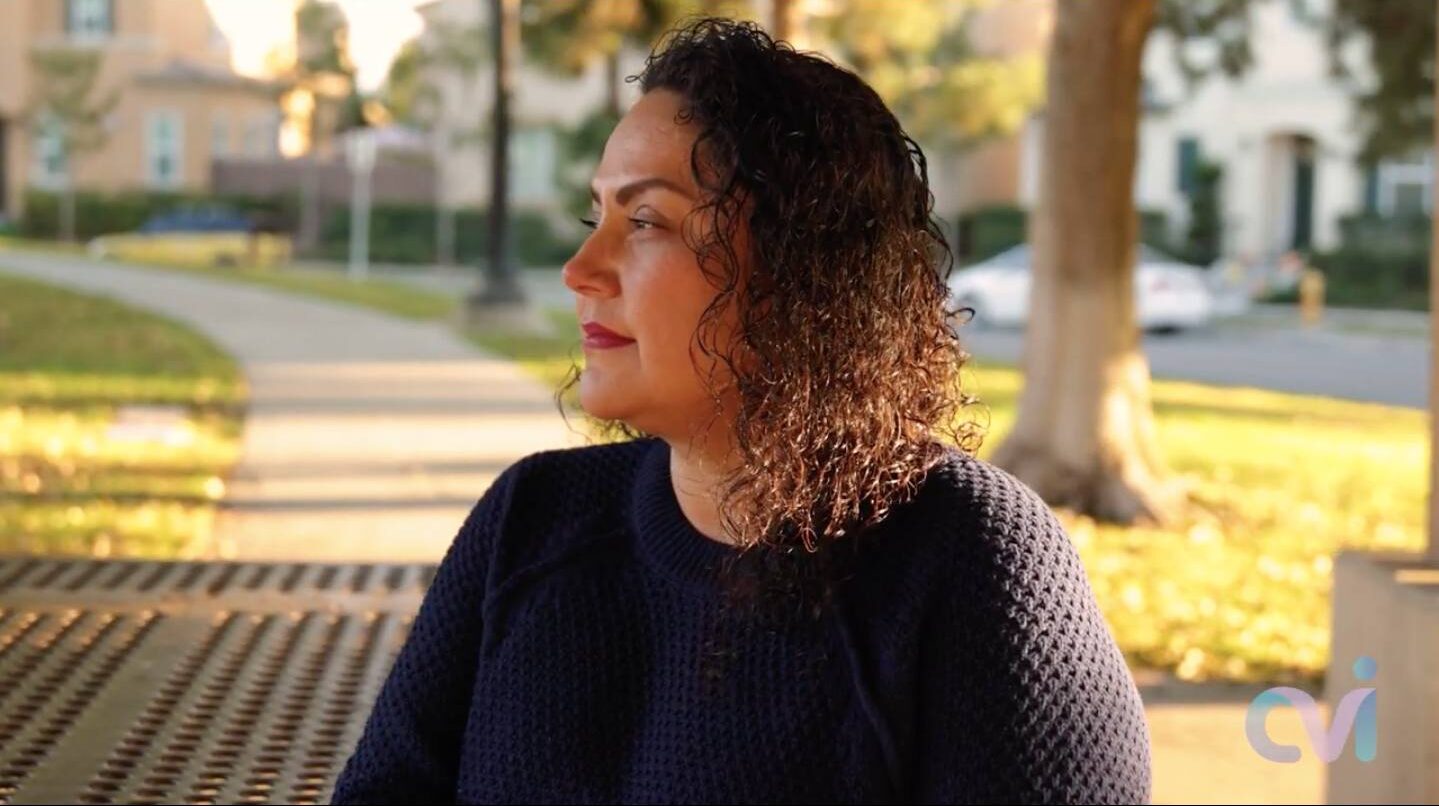
Successful UFE with resolved symptoms. No surgery required.

Told her fibroid was too large and to just have a hysterectomy, she researched her options and found success with UFE.
Request an Appointment
Dr. Allaei will review your imaging, labs, history and fertility goals, and tell you whether fertility-sparing UFE is right for you.
- Virtual video telehealth appointments available.
- All appointments conducted by our board-certified doctor — not assistants or non-physician providers.
Please note that although we strive to protect and secure our online communications, no data transmitted over the Internet can be guaranteed to be completely secure. If you would like to transmit sensitive information, please contact us without including it to arrange a more secure means of communication. By submitting this form you consent to receive text messages from CVI at the number provided. Msg & data rates may apply. Msg frequency varies. Reply STOP to unsubscribe.
Not all embolizations are the same
Uterine artery embolization is offered by practitioners with varying levels of experience — and technique matters, especially when protecting fertility.
Uterine artery embolization (UAE), also called uterine fibroid embolization (UFE), has been an effective, minimally invasive treatment for fibroid symptoms for over 20 years. For women who want to become pregnant, however, a key question has been how treatment affects future fertility.
Our specialist performs a high number of embolizations — not only in the uterus but in higher-risk, complex organs such as the kidney, liver and lung. That breadth of experience allows complex fibroid and adenomyosis cases to be treated safely and effectively, and patients are often surprised how quick and simple their procedure was.
Our center and staff focus on embolization, from your first visit through recovery.
Embolizations in the kidney, liver, lung and other high-risk organs translate into precision in the uterus.
Extensive image-guided experience across the body.
Our specialist keeps up with the research to bring the newest technology and refines care based on patient feedback.
Who performs your fertility-sparing UFE?
Fertility-sparing UFE is performed by a Vascular & Interventional Radiologist trained in partial embolization — not a surgeon. At California Fibroid Center, every procedure is performed personally by Dr. Atabak Allaei, who has completed more than 10,000 image-guided procedures, including over 2,000 embolizations.
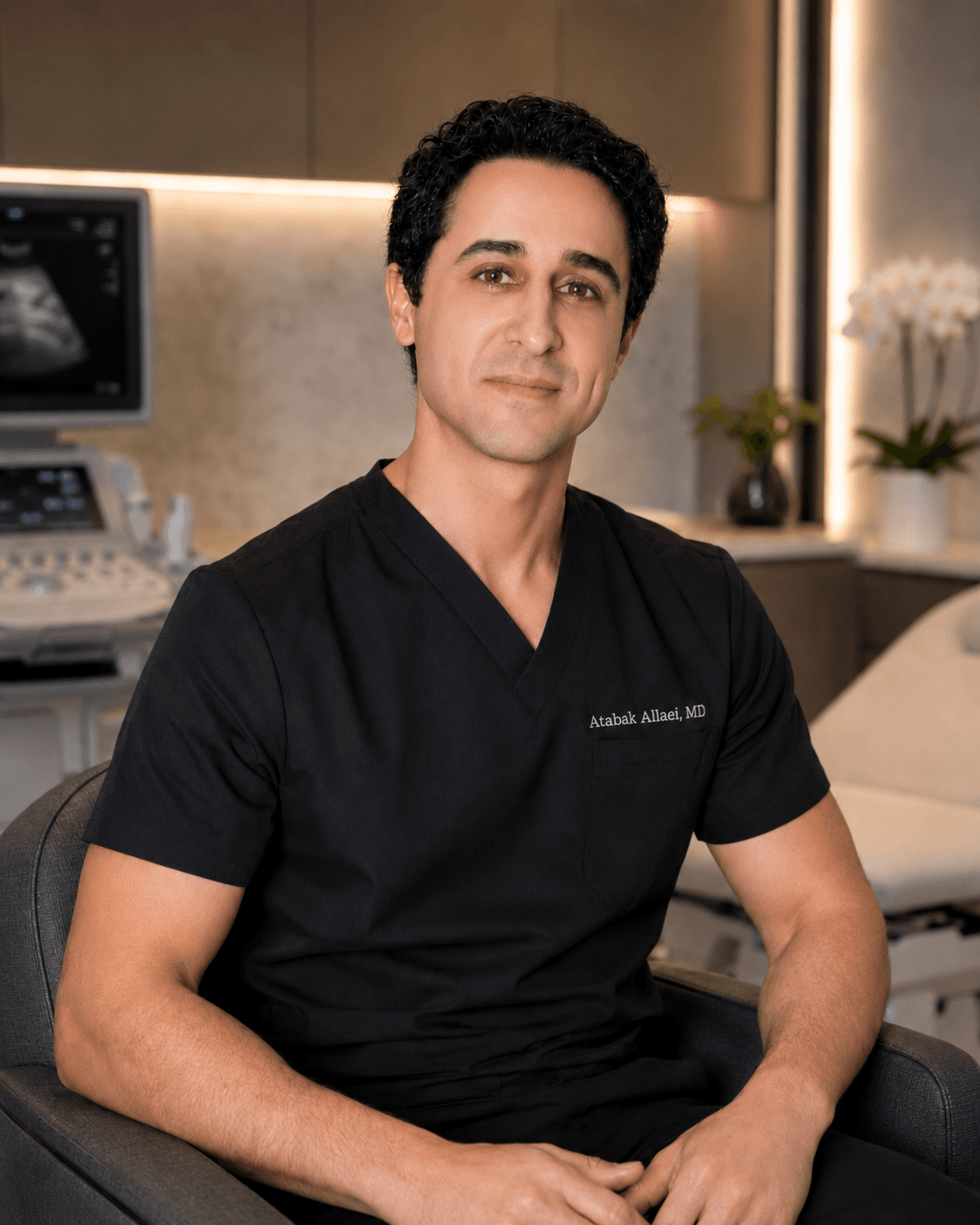
Atabak Allaei, MD
Double Board-Certified · Vascular & Interventional Radiology and Diagnostic Radiology
Image-guided procedures
Embolizations
- Performs every procedure himself — not a physician assistant, nurse practitioner or rotating provider.
- Reads your imaging himself. Board certification in Diagnostic Radiology means he plans your treatment from your own MRI or ultrasound images.
- Complex embolization experience across the uterus, kidney, liver, lung and other high-risk organs — the precision partial UFE requires.
Why the specialty matters
Embolization is performed from inside the arteries through a small nick in the skin — the training and board certification of Vascular & Interventional Radiology. Gynecologists are trained in surgical treatments such as myomectomy and hysterectomy, which is why many women are never told a non-surgical option exists. Seeing both specialists before deciding can help you choose the right treatment.
Training and credentials
- University of California, San DiegoBS, Biochemistry and Cell Biology — Summa Cum Laude
- State University of New YorkDoctor of Medicine
- Residency — New YorkRadiology
- Mallinckrodt Institute of RadiologyFellowship in Vascular & Interventional Radiology — Washington University / Barnes-Jewish
- Cedars-Sinai Medical Center & UCI HealthAttending physician; Medical Director, California Vascular & Interventional
References
- Pisco JM, Duarte M, Bilhim T, et al. Spontaneous pregnancy with a live birth after conventional and partial uterine fibroid embolization. Radiology. 2017;285(1):302-310. doi:10.1148/radiol.2017161495.
- Ghanaati H, Sanaati M, Shakiba M, et al. Pregnancy and its outcomes in patients after uterine fibroid embolization: a systematic review and meta-analysis. Cardiovascular and Interventional Radiology. 2020. doi:10.1007/s00270-020-02521-6.
- Mara M, Maskova J, Fucikova Z, Kuzel D, Belsan T, Sosna O. Midterm clinical and first reproductive results of a randomized controlled trial comparing uterine fibroid embolization and myomectomy. Cardiovascular and Interventional Radiology. 2008;31(1):73-85.
- Manyonda I, Belli AM, Lumsden MA, et al. Uterine-artery embolization or myomectomy for uterine fibroids. New England Journal of Medicine. 2020;383(5):440-451. doi:10.1056/NEJMoa1914735.
- Systematic review and meta-analysis of current evidence in uterine artery embolization vs myomectomy for symptomatic uterine fibroids. Scientific Reports. 2024. doi:10.1038/s41598-024-69754-0.
- Gupta JK, Sinha A, Lumsden MA, Hickey M. Uterine artery embolization for symptomatic uterine fibroids. Cochrane Database of Systematic Reviews. 2014;(12):CD005073. doi:10.1002/14651858.CD005073.pub4.
The above information explains what is involved and the possible risks. It is not meant to be a substitute for informed discussion between you and your doctor, but can act as a starting point for such a discussion.
Fertility-sparing UFE: common questions
What is fertility-sparing (partial) uterine fibroid embolization?
Partial uterine fibroid embolization is a minimally invasive, image-guided procedure that treats fibroids by blocking only the small arterial vessels that feed them, while leaving the larger vessels open. This allows the surrounding healthy uterine tissue to keep its blood supply, with the goal of relieving symptoms while preserving fertility.
How is partial UFE different from traditional UFE?
In traditional uterine artery embolization, particles are injected into the uterine arteries to cut off blood flow to the fibroids. In partial UFE, only the small vessels to the fibroids are embolized and the larger vessels are left patent, which is designed to limit injury to the uterus and nearby reproductive organs.
Can I get pregnant after uterine fibroid embolization?
Yes, pregnancy after UFE has been well documented. In a study of 359 women with fibroids who were unable to conceive, the spontaneous pregnancy rate was 29.5% at one year and 40.1% at two years after UFE, and the probability of a pregnancy with a live birth at two years was 36.7%. Individual results depend on age, fibroid characteristics and other fertility factors.
How do pregnancy rates after UFE compare with myomectomy?
Head-to-head studies show mixed results. In a randomized trial of 121 women planning pregnancy (Mara, 2008), 50% conceived after UFE compared with 78% after myomectomy. In the FEMME randomized trial of 254 women (NEJM, 2020), 8% reported a pregnancy within two years after UFE compared with 4% after myomectomy, although most participants were not trying to conceive. A 2024 meta-analysis of 13 studies found comparable improvement in pregnancy rates. Neither trial studied partial UFE. The right choice depends on your age, fibroids and fertility goals, and should be made together with your doctor.
Why do some women not get pregnant after UFE or myomectomy?
Treating fibroids removes one possible barrier to pregnancy, but fertility depends on many other factors. The most important is age, since fertility declines especially after 35. Other factors include egg supply (ovarian reserve), male-factor infertility, blocked fallopian tubes, endometriosis, adenomyosis and ovulation disorders. Treatment-related factors can also play a role, such as scar tissue after myomectomy, or changes to the uterine lining after UFE. A fertility evaluation before treatment helps identify these issues.
Is partial UFE safe?
Partial UFE is a minimally invasive procedure with no surgical incision, no general anesthesia, no hospital stay and virtually no blood loss. Like any procedure, it carries some risks, which Dr. Allaei reviews with you during your consultation.
Does UFE treat all of my fibroids?
Yes. Uterine fibroid embolization treats all fibroids at once, unlike myomectomy, which removes fibroids individually. It also saves the uterus, unlike hysterectomy.
Will I need general anesthesia or a hospital stay?
No. UFE is performed as an outpatient procedure under local anesthesia through a small nick in the skin of the wrist or groin. There are no stitches and no hospital stay.
How long is recovery after UFE?
Most women recover in a few days, compared with a few weeks after fibroid surgery such as myomectomy or hysterectomy.
Who performs fertility-sparing UFE?
Fertility-sparing UFE is performed by a Vascular & Interventional Radiologist trained in partial embolization. At California Fibroid Center, Dr. Atabak Allaei, a double board-certified Vascular & Interventional Radiologist, performs every procedure personally.
Is UFE covered by insurance?
UFE is covered by many insurance plans. California Fibroid Center offers an online insurance check so you can see whether we are in your network in under a minute.
How many procedures has Dr. Allaei performed?
Dr. Allaei has performed more than 10,000 image-guided procedures, including over 2,000 embolizations, in the uterus as well as complex organs such as the kidney, liver and lung.
Can I have a telehealth consultation?
Yes. Appointments are available by online video telehealth or in person at offices in Los Angeles, Orange County and San Diego.
Have more questions? See our full fibroid FAQ page.
Explore more image-guided treatments
Don’t wait for your fibroids to get larger
Request an appointment to meet with our fibroid specialist, who will review your imaging, labs and history to determine if you are a candidate and the outcomes you can expect. Every woman is an individual and should discuss the risks and benefits of embolization and other treatments with our doctor. Telehealth and in-person visits available across Los Angeles, Orange County and San Diego.
Set up an appointment
By submitting this form you consent to receive text messages from CVI at the number provided. Msg & data rates may apply. Reply STOP to unsubscribe.