


The fibroid treatment most women were never told about.
To this day, most women are offered only hormones, myomectomy, or hysterectomy. Yet UFE — FDA-approved for over 20 years and recognized by the American College of Obstetrics and Gynecology — treats all fibroids at once through a pinhole: no stitches, no general anesthesia, no hospital stay, and it saves your uterus. Nearly 90% of women report significant improvement5 and stay satisfied five years on.6
Fibroid embolization at a glance
One image-guided treatment for all fibroids — through a pinhole.
Everything surgery isn't
- No stitches
- No burning or scraping the lining of the uterus
- No hospital stay
- Saves your uterus (unlike hysterectomy)
- Significant improvement in quality of life
- No major scar or surgical incision (only a small nick in the skin)
- No internal cutting, bleeding or scarring
- Outpatient procedure
- Fast recovery, few days (versus few weeks for surgery)
- Virtually no blood loss (versus possible transfusions)
- No general anesthesia required
- No hysterectomy surgical risks
- Treats all fibroids at once (unlike myomectomy)
- Lowest risks and complications
- Successful for over 20 years!
These are just a few of the benefits over surgery. Read more here.
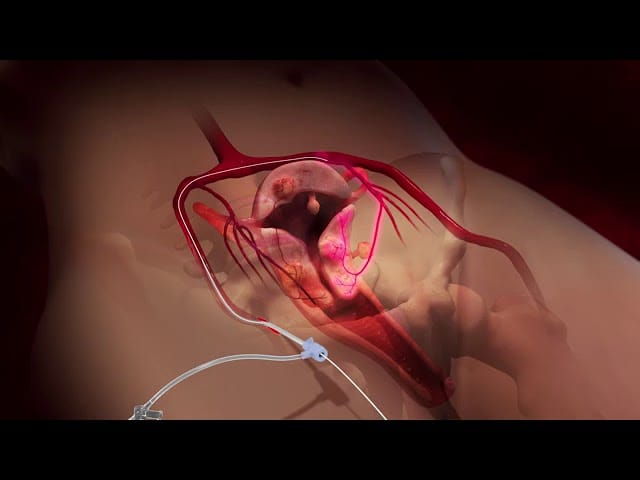
Uterine fibroid embolization (UFE/UAE) is a non-surgical, image-guided procedure that treats all fibroids in one treatment. Through a pinhole slightly larger than an IV — in the wrist/arm or leg — a tiny catheter reaches the uterine artery and releases sand-sized particles that cut off the fibroids’ blood supply, while the uterus and ovaries are spared. Outpatient, local anesthetic with moderate IV sedation, no stitches, no hospital stay. FDA-approved for over 20 years and recognized by the American College of Obstetrics and Gynecology. Nearly 90% of women improve and are satisfied5 — and about 90% never need surgery afterward.5
What is uterine artery or fibroid embolization (UAE/UFE)?
A non-surgical image-guided procedure that treats all uterine fibroids in one treatment — by blocking the blood supply they need to grow.2,3
Uterine fibroids are extremely common — by age 50, the majority of women will have developed them.1 Uterine fibroid embolization, or UFE, is a non-surgical image-guided procedure that effectively treats all uterine fibroids in one treatment. This is done by placing a tiny catheter into the uterine artery and blocking the blood flow to the fibroids using tiny particles. Why does this work? Uterine fibroids are very vascular and receive their blood supply from the uterine arteries, which allows the fibroids to grow over time if left untreated.2,3
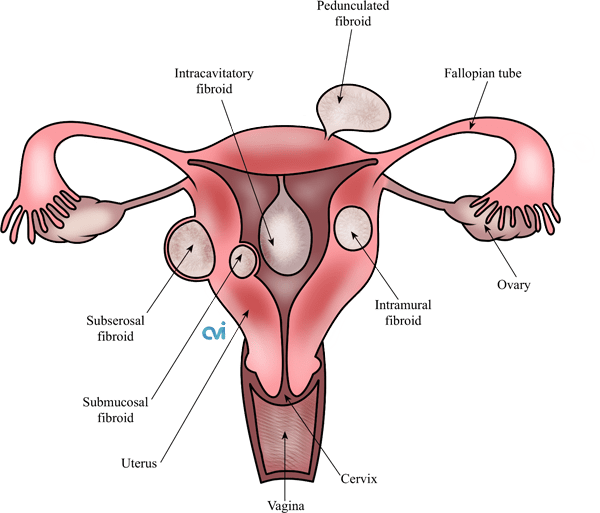
Fibroid embolization can be performed as an outpatient procedure through a tiny pinhole in the skin, resulting in a faster return to work and minimal risk (after 30 days) when compared to having a hysterectomy.4 UFE is also done with local and moderate IV sedation, avoiding the risks of general anesthesia. What kind of facility can the UFE procedure be performed at? Read here.
Our outpatient center sees patients throughout Southern California including Los Angeles, Orange County, and San Diego. The fibroid treatment is performed by our Endovascular Physician (an Interventional Radiologist) who is board certified in image-guided procedures using X-rays, tiny catheters, and other micro-tools, and has performed hundreds of complex embolizations with a special interest in fibroid treatments.
What is Interventional Radiology? This is the only specialty in medicine specifically trained to perform embolization procedures, such as for symptomatic fibroids. Read more here.
90% after UFE do not need surgery.5.
Am I a candidate for uterine fibroid embolization?
If fibroids are causing heavy periods, cramping, or pelvic pain, you are a candidate — and you deserve to know all your options, not just surgery.
If you have reached this page it is likely because you stumbled on it or you heard about the UFE procedure by word of mouth. That is because most women to this day are still subject to major surgery for fibroids without being informed of this alternative treatment. Fibroid embolization has been an FDA-approved treatment for uterine fibroids for over 20 years and is recognized by the American College of Obstetrics and Gynecology as an effective treatment for fibroid tumors. Sadly, most women have only been told that their options are hormone treatments, myomectomy or a hysterectomy.
If you have uterine fibroids with the following symptoms you are a candidate for fibroid embolization:
- Prolonged or heavy periods
- Constipation or bloating
- Painful cramping
- Urinary frequency
- Back or pelvic pain
- Pain during intercourse
What do you need to do next? Request an appointment to meet with our fibroid specialist who will review your imaging, labs and history to determine if you are a candidate for the procedure, and the outcomes you can expect. Each woman is an individual and should discuss the potential risks and benefits of fibroid embolization and other treatments with our doctor to decide which option is best for her.
One consultation, every option on the table. Because gynecologists do not perform UFE, treatment discussions elsewhere often center on surgery alone. Our doctor reviews all of your options — surgical and non-surgical — giving you a comprehensive understanding of the results each one can offer. Patients consistently tell us this is the most helpful part of their visit.
Our patient experiences
Our patients tell their own UFE stories — heavy bleeding stopped, surgeries avoided, uteruses saved.







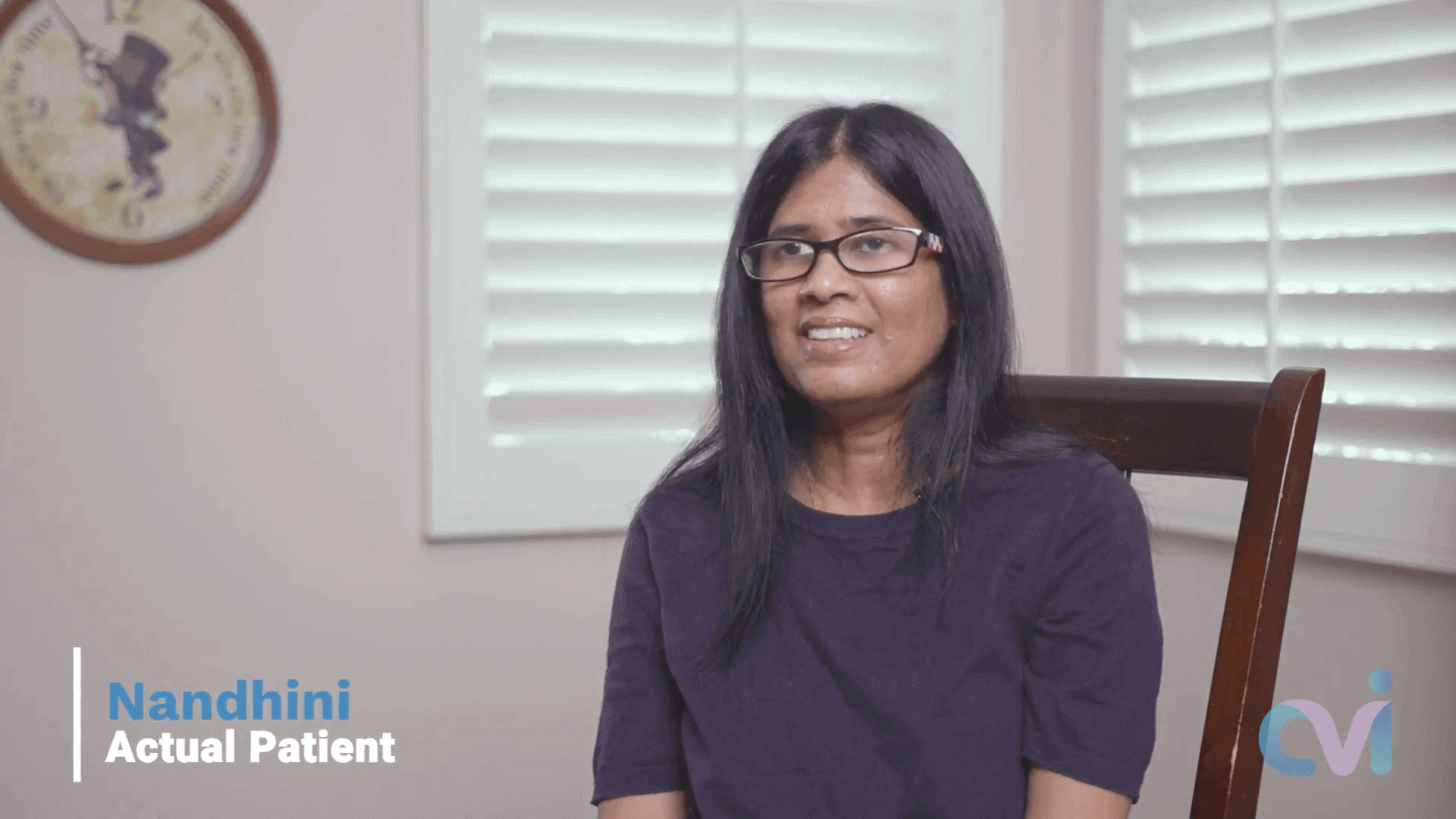
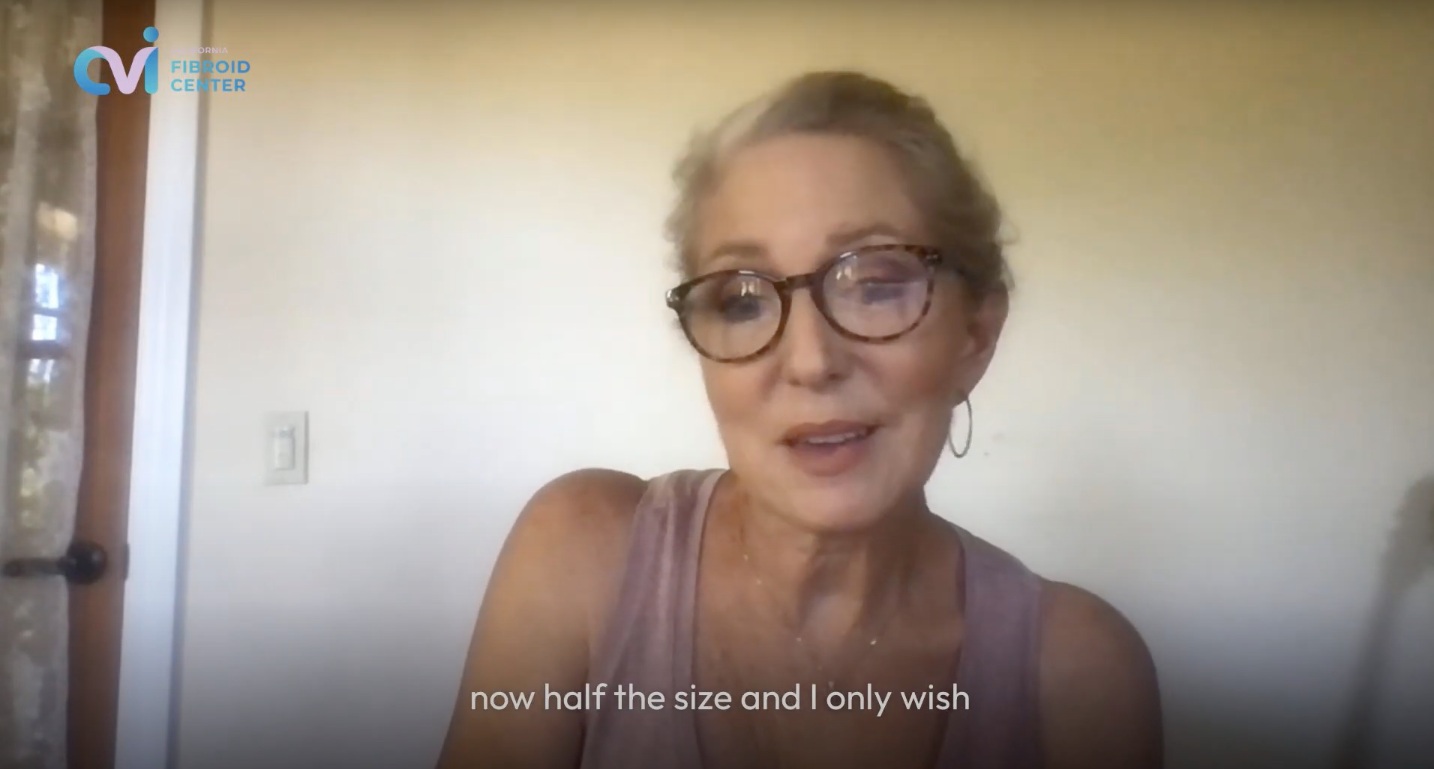




More than
More than
Request an Appointment
Please note that although we strive to protect and secure our online communications, and use the security measures detailed in our Privacy Policy to protect your information, no data transmitted over the Internet can be guaranteed to be completely secure and no security measures are perfect or impenetrable. If you would like to transmit sensitive information to us, please contact us, without including the sensitive information, to arrange a more secure means of communication. By submitting this form you consent to receive text messages from CVI at the number provided. Msg & data rates may apply. Msg frequency varies. Unsubscribe at any time by replying STOP.
Appointments are available via an online video telehealth platform or in person at one of the offices in Los Angeles, Orange County or San Diego. Why should you choose us? Read here.
What to expect during the UFE
A tiny catheter from the arm (radial) or leg (femoral), real-time X-ray to the uterine artery, sand-sized particles — and the uterus and ovaries are spared.
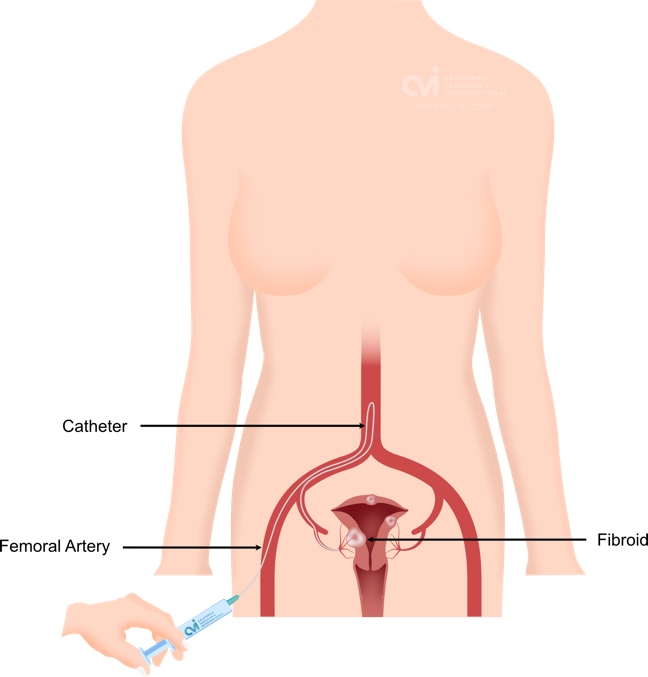
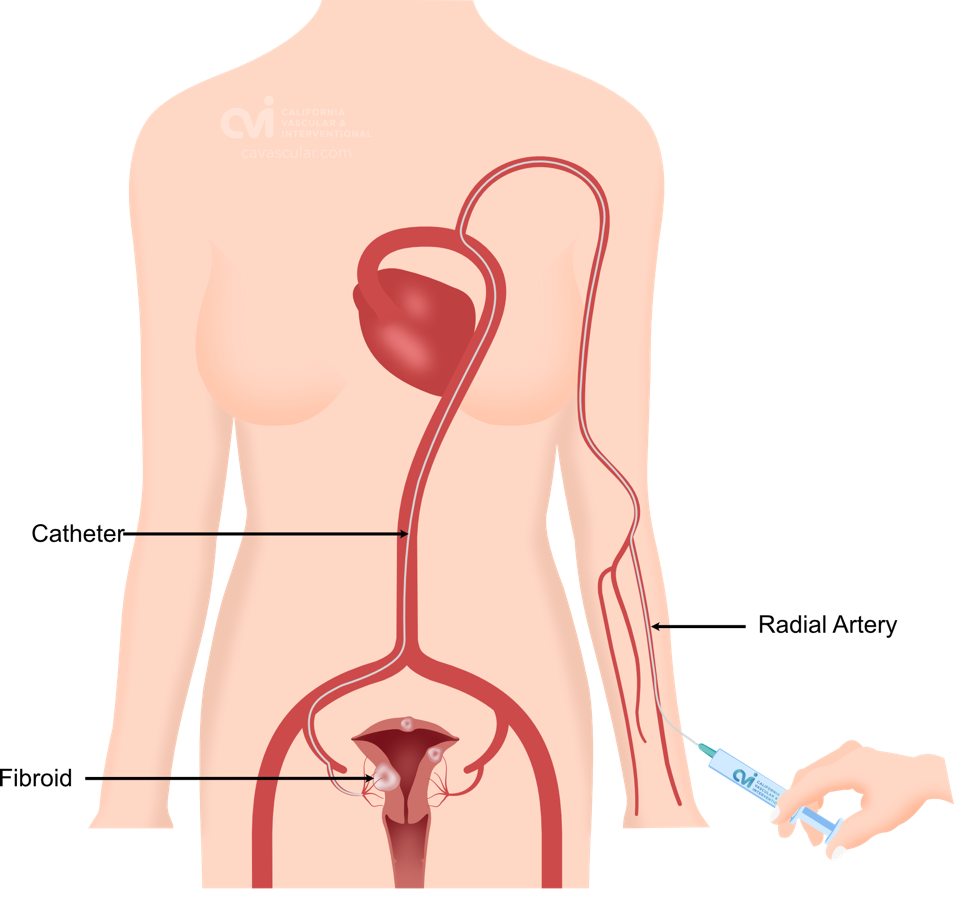
Fibroid embolization is an outpatient non-surgical procedure with minimal downtime. The procedure is done in an outpatient state of the art center where our interventional radiologist performs the fibroid treatment through a tiny tube called a catheter. This procedure can be performed by either placing the catheter in an artery at the top of the leg (called a femoral approach) or by placing it into an artery in the lower arm (called a radial approach). What is the difference between radial and femoral UFE? Read here.
Ultrasound-guided numbing & IV sedation
The doctor places the numbing medication under ultrasound guidance — once the skin is numb, most patients don’t feel anything. IV sedation is also given to relax you. No general anesthesia.
Pinhole access — arm or leg
The catheter enters through a tiny pinhole slightly larger than an IV — radial (lower arm) or femoral (top of the leg).
Real-time guidance to the uterine artery
A sophisticated X-ray machine creating moving pictures in “real” time guides the catheter through the blood vessels and into the uterine artery.
All fibroids treated — uterus spared
Sand-sized particles lodge in the vessels feeding the fibroids and cut off their blood supply — but the uterus and ovaries are spared. Home the same day.
The patient is given a local and topical anesthetic to numb the skin and a mild sedative, so that the procedure is not painful. Our doctor places the numbing medication under ultrasound guidance — a technique that is very effective given his extensive ultrasound experience — so that after the skin is numb, most patients don’t feel anything during the procedure. IV sedation is also given to help patients relax. A sophisticated X-ray machine that creates moving pictures in “real” time enables the doctor to see the catheter as it is guided through the blood vessels and into the uterine artery.
The final step in fibroid embolization is the injection of tiny particles the size of sand particles through the catheter. The particles lodge in the blood vessels feeding the fibroids and cut off their blood supply, but the uterus and ovaries are spared.
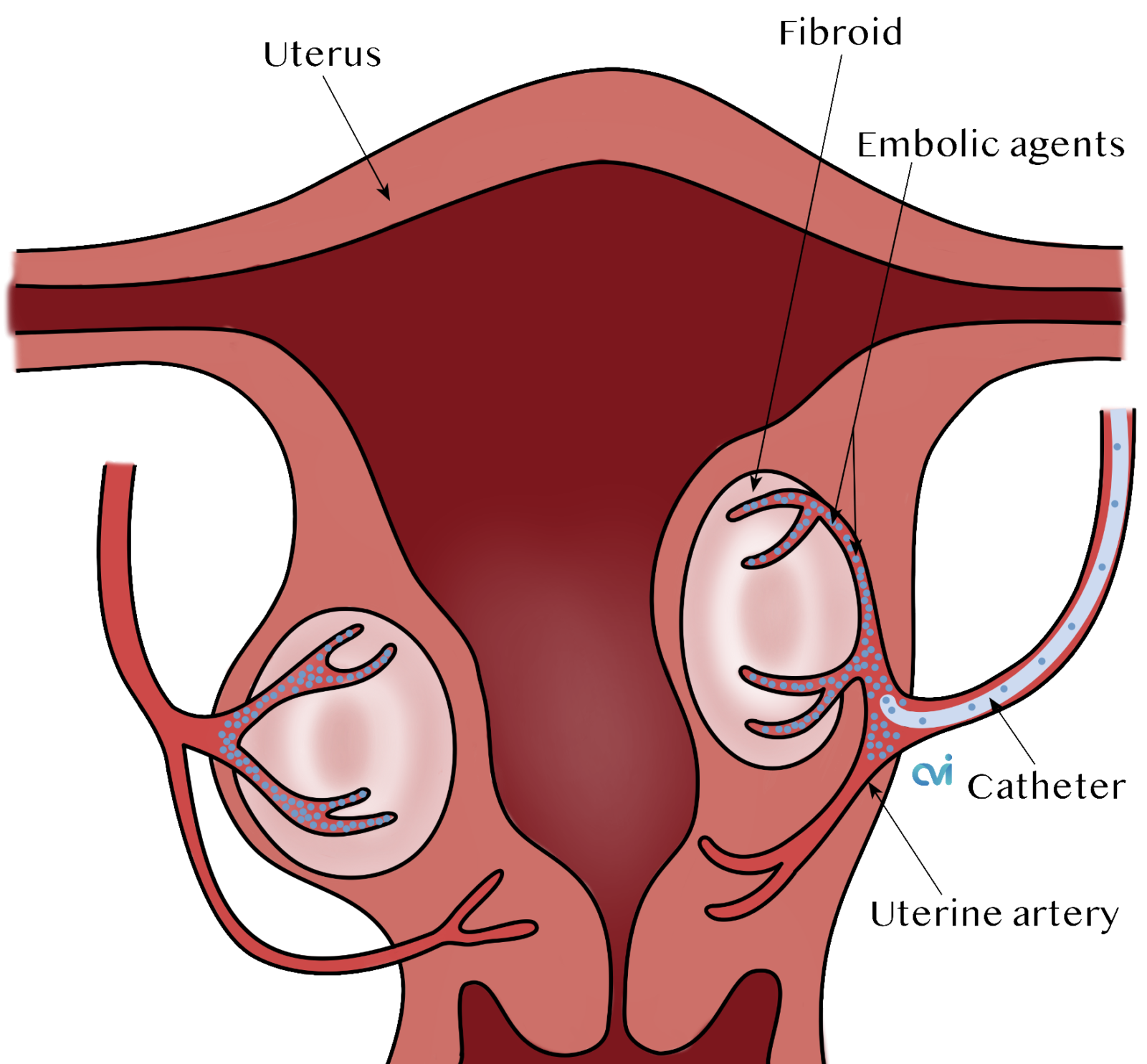
How can fibroid embolization be effective without surgery?
Advanced imaging, microwires, and catheters in experienced hands reach the fibroids from the arm or leg — no large incisions, no camera in the abdomen.
The UFE procedure is performed in a million dollar vascular center using advanced imaging technology with microwires and catheters, which allow the treatment to be performed through a tiny nick in the skin (slightly larger than an IV).
This imaging technology in experienced hands helps guide the microwires and catheters to the fibroids all the way from the leg or arm. As a result the specialist can visualize the anatomy and guide the tools to the area of interest without having to make large incisions or placing a camera into the abdomen as required for other fibroid surgeries.
Advances in medicine — and the tools our doctor uses — also allow him to be very selective in treatment, targeting only the abnormal fibroid tissue while the healthy tissue of the uterus is left untouched.
What are the results of UFE?
Nearly 90% of women significantly improve and are satisfied5 — and a similar number are still happy 5 years later.6
This clinically proven advancement in medicine has not only paved the way for fibroid treatment but also many others, including cancer therapies.
Nearly 90 percent of patients have significant improvement and are satisfied from having undergone the fibroid embolization procedure, saving the uterus.5 Nearly a similar number of patients report they are still happy with their results 5 years later.6 Abnormal fibroid bleeding usually stops within one to two months, but it may stop immediately. On average, fibroids shrink approximately 40 percent to 60 percent in size by six months, and they may continue to shrink for a year or more.
One thing worth knowing as you research: results depend on proper patient selection and on who performs the embolization. Being evaluated by our specialist — who regularly performs complex embolizations and treats prior failures — is important for understanding the particular success rate you can expect for your case. Some centers simply treat everyone, which is why you may see patients online describing very different results.
UFE Embolization
- Treats all fibroids at once
- Saves your uterus — ovaries spared
- Pinhole access, no stitches, no scar
- No general anesthesia, no hospital stay
- Recovery in days; virtually no blood loss
- ~90% improved and satisfied5
Myomectomy · Hysterectomy
- Myomectomy treats fibroids one by one — others can remain
- Hysterectomy removes the uterus entirely
- General anesthesia and internal cutting
- Hospital stay; recovery measured in weeks
- Possible blood loss and transfusions
- Burning or scraping of the uterine lining (ablation)
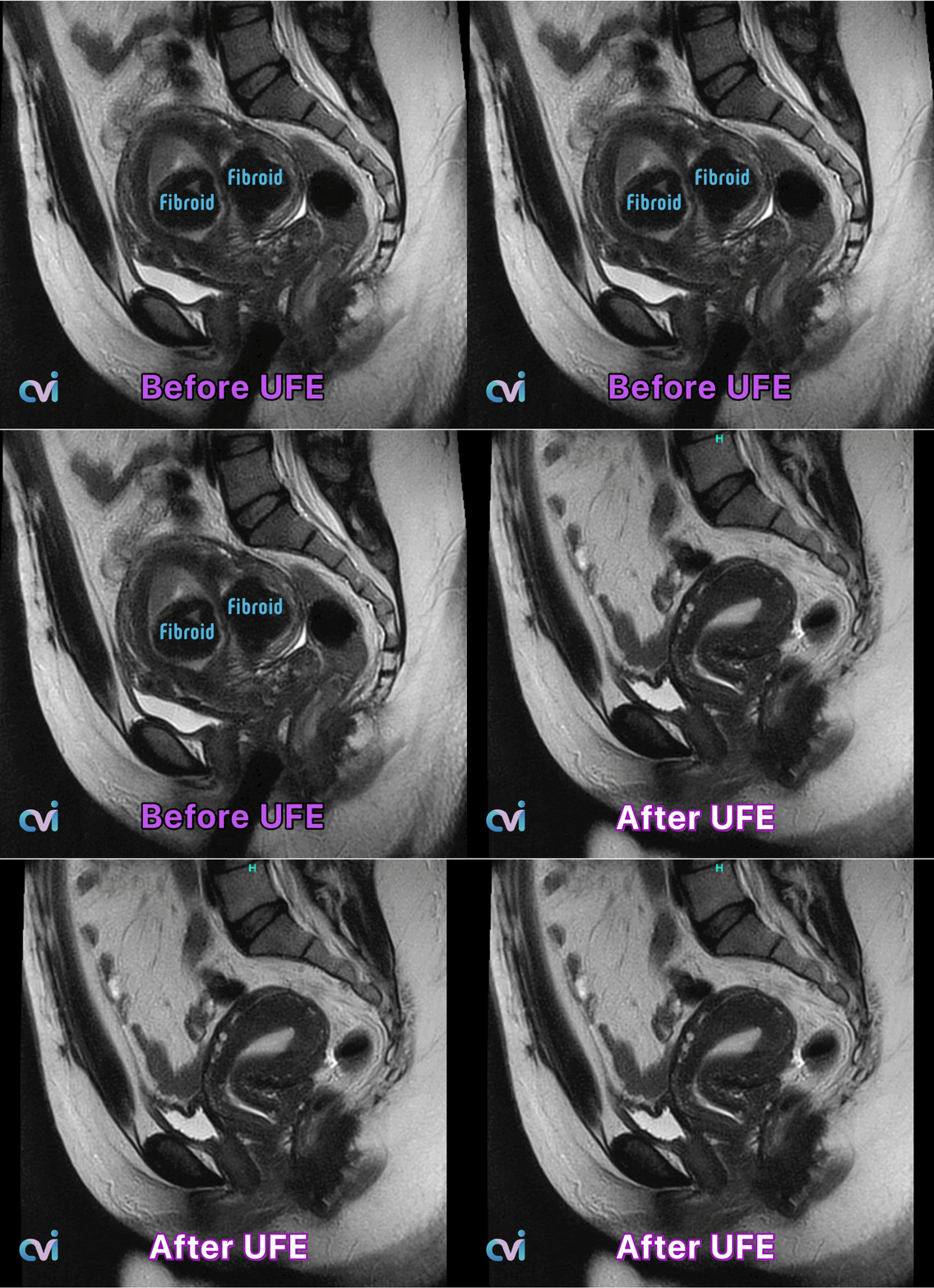
Not all embolizations are the same
UFE may be offered by practitioners of varying levels of experience — an academic hospital's doctors in training often place too many particles; others use outdated products or techniques. Technique decides your outcome.
Not all embolizations are the same. Uterine artery embolization may be offered by practitioners of varying levels of experience. An academic hospital will have doctors in training that will often place too many particles into the artery. Other practitioners may use products or suboptimal techniques that are outdated.
Our center specializes in embolizations and our staff is uniquely trained to care for these types of procedures, from the pre-op to the post-op period. Our specialist performs a high number of embolizations for not only the uterus but also in other more high risk and complex organs, such as the kidney, liver, lung and others. Patients are often surprised how quick and simple the UAE procedure was for them, but this comes from the experience of our specialist who performs a variety of complex embolizations safely. This diversity of experience has enabled our specialist to treat complex fibroid and adenomyosis cases safely and effectively.
It matters who holds the wire
Embolizing fibroids means steering microwires and a hair-thin catheter from the wrist or leg into the uterine arteries — reading a 2D X-ray while navigating a 3D vascular tree, and placing sand-sized particles into only the vessels feeding the fibroids while sparing the uterus and ovaries. Too many particles, or outdated technique, and the result suffers. That level of catheter-and-wire skill is part rigorous training and part innate talent — a steadiness of hand and an ability to visualize the end result that can’t simply be taught. Our specialist brings it from more than 800 successful embolizations and over 4,000 image-guided procedures — including higher-risk, complex organs like the kidney, liver, and lung — with a special interest in fibroid treatments and the experience to take on complex fibroid and adenomyosis cases safely. He continually keeps up with the research to bring the best and newest technology to our center.
The doctor, every time
All appointments are conducted by our board-certified doctor — not assistants or non-physician providers — from your first consult to your follow-up.
Exceptional catheter-and-wire skill
Sparing the uterus and ovaries while cutting off every fibroid’s supply takes a steadiness of hand that’s part training, part innate talent.
Complex fibroid & adenomyosis cases
Embolization depth across the kidney, liver, and lung is what makes complex uterine cases — and adenomyosis — routine here.
Every option, explained by the doctor
Gynecologists don’t perform UFE — our specialist reviews all surgical and non-surgical options with you, so you understand the results each can offer. Patients tell us it’s the most helpful part of their visit.
Request an Appointment
Please note that although we strive to protect and secure our online communications, and use the security measures detailed in our Privacy Policy to protect your information, no data transmitted over the Internet can be guaranteed to be completely secure and no security measures are perfect or impenetrable. If you would like to transmit sensitive information to us, please contact us, without including the sensitive information, to arrange a more secure means of communication. By submitting this form you consent to receive text messages from CVI at the number provided. Msg & data rates may apply. Msg frequency varies. Unsubscribe at any time by replying STOP.
Who performs your fibroid embolization?
At California Fibroid Center, your UFE is performed by our Endovascular Physician — a board-certified Interventional Radiologist, the only specialty in medicine specifically trained to perform embolization procedures. Every appointment, from consult to follow-up, is conducted by the doctor himself.
It matters who holds the wire. Embolizing fibroids means guiding microwires and catheters from the arm or leg into the uterine arteries — and releasing particles into only the vessels feeding the fibroids, while the uterus and ovaries are spared. That level of catheter-and-wire skill is part rigorous training and part innate talent — a steadiness of hand and an ability to visualize the end result that can’t simply be taught. It’s the same precision he brings from hundreds of complex embolizations across the body’s higher-risk organs — the kidney, liver, and lung.
Our Fibroid Specialist
Board certified in image-guided procedures using X-rays, tiny catheters, and other micro-tools, our specialist has performed more than 800 successful embolizations and over 4,000 image-guided procedures — with a special interest in fibroid treatments and the breadth of experience to treat complex fibroid and adenomyosis cases safely and effectively. Consultations by telehealth or in person in Los Angeles, Orange County, and San Diego. Meet our specialist.
Fibroid embolization: common questions
What is uterine fibroid embolization (UFE/UAE)?
Uterine fibroid embolization, or UFE, is a non-surgical image-guided procedure that effectively treats all uterine fibroids in one treatment. A tiny catheter is placed into the uterine artery and the blood flow to the fibroids is blocked using tiny particles. It works because fibroids are very vascular and receive their blood supply from the uterine arteries, which allows them to grow over time if left untreated. UFE is performed as an outpatient procedure through a tiny pinhole in the skin, with local and moderate IV sedation — avoiding the risks of general anesthesia — and it spares the uterus and ovaries.
Am I a candidate for uterine fibroid embolization?
If you have uterine fibroids with prolonged or heavy periods, constipation or bloating, painful cramping, urinary frequency, back or pelvic pain, or pain during intercourse, you are a candidate for fibroid embolization. UFE has been an FDA-approved treatment for over 20 years and is recognized by the American College of Obstetrics and Gynecology as an effective treatment for fibroid tumors. A consultation with the fibroid specialist reviews your imaging, labs, and history to confirm candidacy and the outcomes you can expect.
How is UFE performed, and does it hurt?
UFE is an outpatient, non-surgical procedure with minimal downtime. The catheter is placed either in an artery at the top of the leg (femoral approach) or in an artery of the lower arm (radial approach), through a tiny pinhole slightly larger than an IV. The doctor places the numbing medication under ultrasound guidance — once the skin is numb, most patients don’t feel anything — and IV sedation is also given to help you relax. A real-time X-ray machine guides the catheter into the uterine artery, and tiny sand-sized particles are injected to cut off the fibroids’ blood supply — while the uterus and ovaries are spared.
What is the difference between radial (arm) and femoral (leg) UFE?
Both approaches reach the uterine arteries through a tiny pinhole: the femoral approach enters through an artery at the top of the leg, while the radial approach enters through an artery in the lower arm. The specialist selects the access point best suited to your anatomy and case; the treatment of the fibroids themselves is the same.
How effective is UFE — and how much do fibroids shrink?
Nearly 90 percent of patients have significant improvement and are satisfied after fibroid embolization, saving the uterus — and a similar number report they are still happy with their results 5 years later. Abnormal fibroid bleeding usually stops within one to two months, and may stop immediately. On average, fibroids shrink approximately 40 to 60 percent in size by six months, and they may continue to shrink for a year or more. About 90% of women do not need surgery after UFE.
How does UFE compare to myomectomy or hysterectomy?
Unlike myomectomy, UFE treats all fibroids at once; unlike hysterectomy, it saves your uterus. There are no stitches, no major scar or surgical incision (only a small nick in the skin), no general anesthesia, no burning or scraping of the uterine lining, no internal cutting, bleeding or scarring, no hospital stay, and virtually no blood loss (versus possible transfusions with surgery). Recovery takes a few days versus a few weeks for surgery, with significant improvement in quality of life. Each woman should discuss the risks and benefits of embolization and the other treatments with the doctor to decide which option is best for her.
Is uterine fibroid embolization safe and proven?
Yes — fibroid embolization has been an FDA-approved treatment for over 20 years, is recognized by the American College of Obstetrics and Gynecology, and has been successful for over two decades. Compared with hysterectomy, UFE offers a faster return to work and minimal risk after 30 days. It avoids general anesthesia, requires no hospital stay, and this clinically proven advancement has also paved the way for treatments in other areas of medicine, including cancer therapies.
Why choose California Fibroid Center for UFE?
Not all embolizations are the same — uterine artery embolization may be offered by practitioners of varying experience, and technique matters. Our center specializes in embolizations: the specialist has performed more than 800 successful embolizations and over 4,000 image-guided procedures, including a high number of embolizations in higher-risk, complex organs such as the kidney, liver, and lung — experience that enables him to treat complex fibroid and adenomyosis cases safely and effectively. All appointments are conducted by the board-certified doctor, not assistants or non-physician providers, and staff are uniquely trained in embolization care from pre-op through post-op.
Have more questions? Take a look at our FAQ page.
1.) Day Baird D, Dunson DB, Hill MC, Cousins D, Schectman JM. High cumulative incidence of uterine leiomyoma in black and white women: ultrasound evidence. Am J Obstet Gynecol. 2003 Jan;188(1):100 – 7.
2.) Pelage, J.-P., Cazejust, J., Pluot, E., Le Dref, O., Laurent, A., Spies, J. B., … Lacombe, P. (2005). Uterine Fibroid Vascularization and Clinical Relevance to Uterine Fibroid Embolization. Radiographics, 25, S99–S117.
3.) Peddada, S. D., Laughlin, S. K., Miner, K., Guyon, J.-P., Haneke, K., Vahdat, H. L, Baird, D. D. (2008). Growth of uterine leiomyomata among premenopausal black and white women. Proceedings of the National Academy of Sciences, 105(50), 19887–19892.
4.) Spies J et al. Outcome of uterine embolization and hysterectomy for leiomyomas: results of a multicenter study. American Journal of Obstetrics & Gynecology 2004;191: 22-31.
5.) Lohle, P. et al. Long term outcome of uterine artery embolization for symptomatic uterine leiomyomas. JVIR 2008; 19:319-326
6.) Gupta JK, Sinha A, Lumsden MA, Hickey M. Uterine artery embolization for symptomatic uterine fibroids. Cochrane Database of Systematic Reviews 2014, Issue 12. Art. No.: CD005073.
The above information explains what is involved and the possible risks. It is not meant to be a substitute for informed discussion between you and your doctor, but can act as a starting point for such a discussion.
Related fibroid resources & treatments
Fertility-Sparing UFE
Fibroid embolization when future pregnancy matters.
Adenomyosis
Embolization for adenomyosis — surgery isn't the only path.
UFE vs Myomectomy vs Hysterectomy
The side-by-side comparison chart.
Advantages of UFE
The full list of benefits over surgery.
Symptoms Checker
See if your symptoms point to fibroids.
Meet Our Specialist
The physician who performs your treatment.